

Solar Lighting Upgrade Project of Dharahara Tower Compound, Kathmandu, Nepal


Project Overview
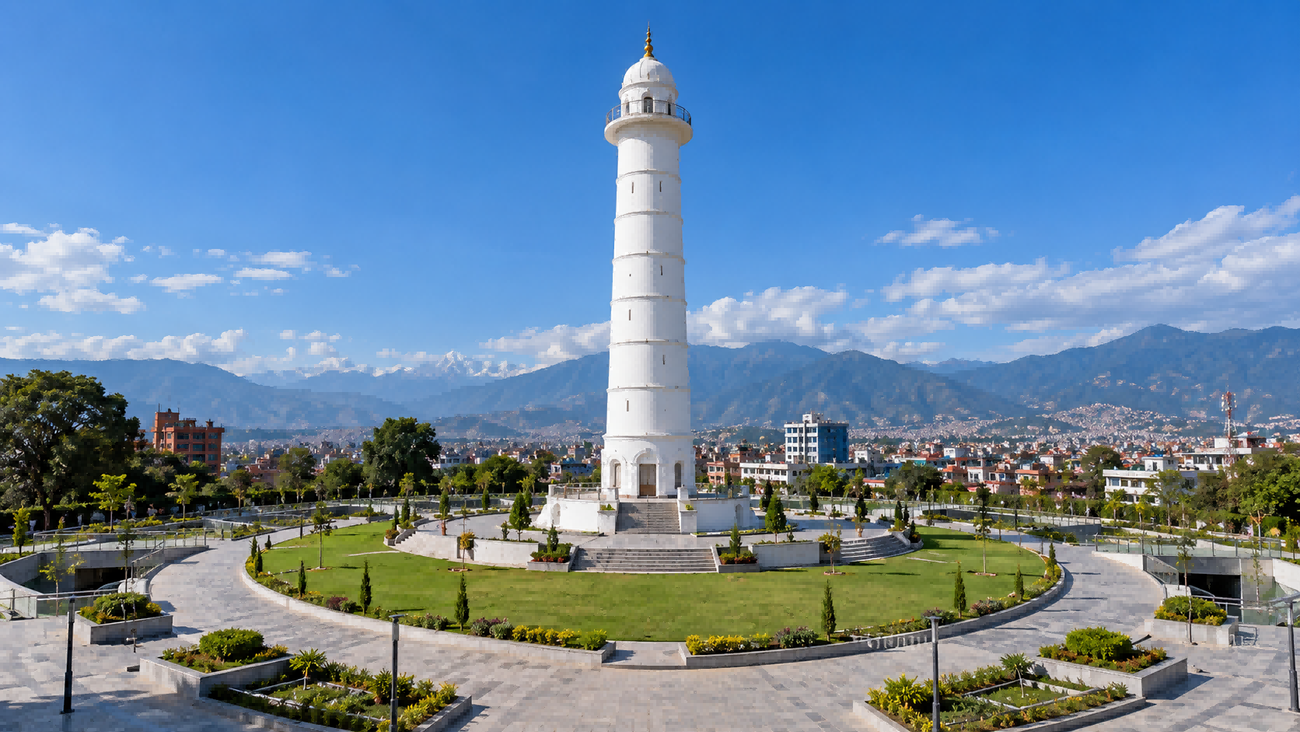
This project is located in Kathmandu, capital of Nepal. Dharahara Tower is a famous historical landmark of Kathmandu. The reconstructed tower serves as cultural exhibition and urban sightseeing site. The tower compound includes landscaped plaza, circular walkway, green courtyard, low landscape walls and visitor rest platforms, serving local residents and international tourists.
Before renovation, the original mains lighting cables of plaza and outer walkways were aged. Some walkways and green nodes lacked enough illumination. Municipal power supply in Kathmandu is unstable, and power outages endanger night sightseeing safety. The renovation covers landscaped plaza, circular walkways, green courtyards and visitor platforms, with total compound area around 28,000㎡ and about 1,020 linear meters of pedestrian paths.
The scheme adopts solar garden lights and solar wall lamps. Solar garden lights are placed in landscaped plazas, circular walkways and green courtyards for continuous soft functional lighting. Solar wall lamps are installed on low walls, rest platform side walls and corridor columns to enrich nightscape layers of this historic building and improve tourist wayfinding. The system works independently on solar energy, reducing cable trenching inside the compound. Warm-white static lighting is used without colourful dynamic lighting, preserving the solemn and quiet atmosphere of this historic landmark.
Local Environmental Conditions
Kathmandu lies in valley on southern foothills of Himalayas, subtropical monsoon climate with dry and wet seasons. Heavy rainfall and high humidity occur in rainy season; dry season has strong sunshine, intense UV and big temperature difference between day and night. Outdoor lamps need excellent waterproof and moisture-proof, UV resistance, and maintain basic energy storage during long cloudy rainy days to adapt to humid valley environment.
As a popular tourist landmark, Dharahara Tower receives tourists and local residents at night. The lighting system must have stable endurance to guarantee safety for night sightseeing and walking.

Project Objectives
- Raise average illuminance of walkways and landscaped plazas from 6–11 lux before renovation to 18–24 lux, ensuring pedestrian safety for tourists and residents at night.
- Reach illuminance uniformity ≥0.65 in main pedestrian zones, eliminating dark spots at path corners, platform edges and green nodes.
- Deploy solar garden lights across plazas, circular walkways and green courtyards; install solar wall lamps on low walls, platform side walls and corridor columns to improve night sightseeing wayfinding.
- Apply unified warm-white static lighting without coloured dynamic effects, keeping solemn and quiet night atmosphere for historic landmark.
- Keep annual luminaire failure rate ≤3%, adapting to Kathmandu valley’s high humidity in rainy season and strong UV in dry season.
- Reduce cable trenching work and mains reliance, cutting maintenance workload by about 56%–60% and lowering long-term electricity and pipeline maintenance costs.
- Support night tourism, citizen leisure and security patrols, accommodating about 1,800 night-time visitors daily.

Project Outcomes
After completion, average illuminance of walkways and plazas reaches 20 lux, within target range 18–24 lux. Illuminance uniformity of main pedestrian areas hits 0.67, satisfying requirement ≥0.65. Dark spots at path corners, platform edges and green nodes are largely eliminated, making night sightseeing routes safe and clear.
Solar garden lights are evenly arranged in plazas, circular walkways and green courtyards to form soft continuous pedestrian light strips. Solar wall lamps cast gentle landscape light on low walls, platform side walls and columns to set off the historic style of Dharahara Tower. The system stores energy efficiently in dry season and runs stably under high humidity in rainy season. Measured annual luminaire failure rate is 2.8%, under the 3% target. Maintenance workload drops by approximately 58%. It avoids large-scale cable trenching and removes risks caused by unstable grid power.
The night environment is solemn and quiet. Solar garden lights and solar wall lamps build the pedestrian lighting and sightseeing wayfinding system for tower compound, balancing visitor safety and cultural nightscape texture of this historic landmark.
