

Solar Lighting Upgrade Project for the Public Spaces Around KICC, Nairobi, Kenya

Project Overview
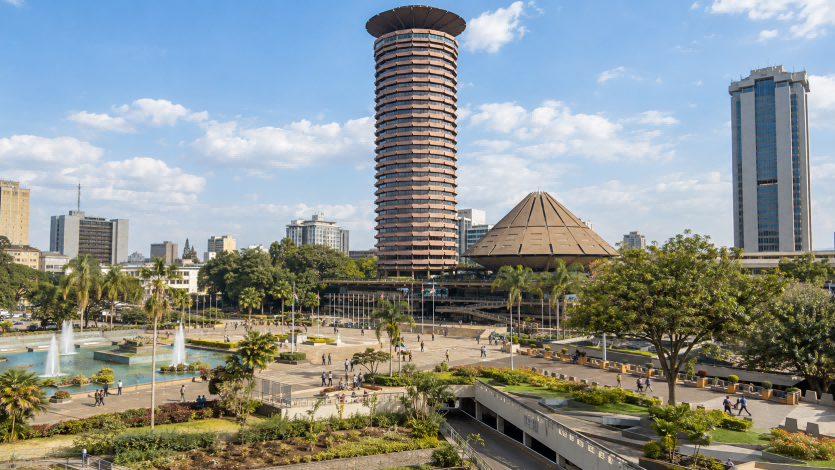
This project upgraded solar lighting around the Kenyatta International Convention Centre (KICC) in Nairobi, Kenya. The scope covered the surrounding plaza, landscaped areas, pedestrian routes and supporting buildings. KICC is one of Nairobi’s recognised landmarks, comprising a main tower, podium and conference facilities, and remains closely associated with the city skyline.
Before the upgrade, some pedestrian routes and landscaped areas had insufficient lighting at night, with dark spots near certain walls and entrances. The project covered approximately 12,000㎡ of public and landscaped space, with pedestrian routes extending about 680m. Solar outdoor garden lights were installed along paths, planted areas and seating zones. Solar wall lights were mounted on supporting buildings, entrances and low perimeter walls to improve visibility and wayfinding.
The distributed lighting layout improved continuity across the public areas while reducing the ground and landscape disruption associated with conventional cabling.
Local Environmental Conditions
Nairobi receives good sunlight, while daily temperature changes, seasonal rainfall and urban dust can affect outdoor lighting installations. Fixture locations were planned according to site sunlight conditions, with attention to shade from trees and buildings. Rain protection was strengthened at wall-mounting points and electrical connections.
The areas around KICC support conference visits, daily pedestrian movement and public activities. The lighting system needed to cover primary routes, entrances and seating areas without creating excessive brightness or visual clutter.

Project Objectives
- Raise average illuminance along primary routes and public activity areas from 8–12 lux to 18–25 lux.
- Achieve illuminance uniformity of ≥0.65 along main pedestrian routes, reducing dark areas.
- Install solar outdoor garden lights along paths and landscaped areas for continuous, comfortable pedestrian lighting.
- Install solar wall lights on supporting buildings, entrances and low perimeter walls to supplement local illumination.
- Optimise fixture placement to reduce the impact of shade on solar charging and night-time operation.
- Improve lighting layers at entrances, pathways and seating nodes through zoned placement.
- Reduce conventional cabling and routine maintenance workload while improving ease of operation.
Project Outcomes
After completion, average illuminance along the primary pedestrian routes and public activity areas reached 22 lux, with uniformity of 0.69, improving the night-time circulation environment. Solar outdoor garden lights were arranged continuously along paths and landscaped areas, improving route visibility. Solar wall lights supplemented illumination at entrances, supporting building facades and areas beside low perimeter walls.
The project improved lighting continuity and spatial recognition at night, reducing dark areas in public spaces. The overall lighting fits the surrounding architecture and landscape, providing a more reliable night-time environment for conference visits and daily pedestrian movement.
